
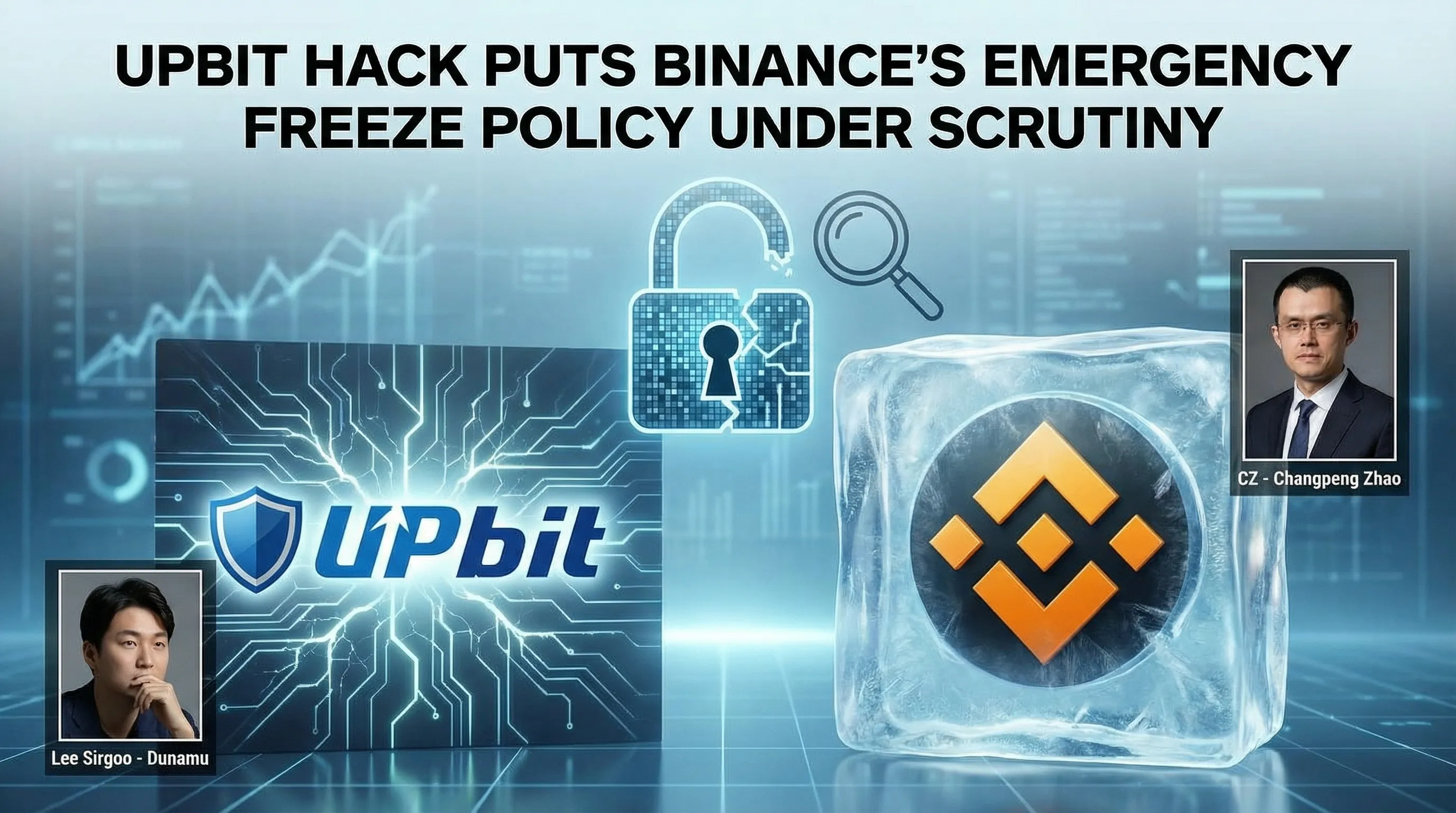
Key Takeaways
- Partial Freeze: Binance reportedly froze only 17% of the funds South Korean police linked to the Upbit hack.
- Cross-Border Enforcement Challenge: The incident highlights practical difficulties in international cooperation between exchanges and law enforcement.
- Call for Global Protocol: Experts suggest establishing a global emergency hotline between exchanges could mitigate damage from future hacks.
- Ongoing Investigation: Both Upbit and Binance are cooperating with authorities as the investigation into the $36 million hack continues.
A recent report has cast a spotlight on how major cryptocurrency exchanges handle cross-border law enforcement requests, following the high-profile hack of South Korean exchange Upbit. The incident raises critical questions about the efficacy of emergency response protocols in the global crypto ecosystem.
Details of the Freeze Request
According to a report from South Korean broadcaster KBS, investigators requested that Binance freeze approximately 470 million Korean won (about $370,000) in Solana (SOL) tokens. These funds were believed to be connected to the November 27th security breach at Upbit, one of South Korea's largest digital asset trading platforms. The hack resulted in unauthorized withdrawals of Solana-based assets valued at roughly $36 million.
However, Binance's response fell short of the request. The exchange reportedly froze only about $55,000 worth of assets—roughly 17% of the total amount flagged by police—after a 15-hour delay. KBS cited Binance's need for "additional verification" as a reason for the partial and delayed action.
Expert Commentary on Exchange Cooperation
The report included insights from blockchain industry experts who emphasized the importance of swift action in such cases. Cho Jae-woo, director of Hansung University’s Blockchain Research Institute, noted the critical role of rapid freezes in limiting financial damage from exchange hacks and cryptocurrency theft.
"Rapid initial freezes can be important for limiting damage in hacking cases. However, exchanges often refer to litigation risks as 'an excuse' for being resistant to such requests."
Cho further suggested that establishing a global hotline between exchanges with emergency freeze authority could significantly improve response times and help mitigate losses from future security incidents, addressing a key vulnerability in the current system.
Official Responses and Ongoing Investigation
When contacted for comment, an Upbit spokesperson told Cointelegraph that local law enforcement remains "actively investigating" the breach to identify the attackers, though they declined to comment specifically on the KBS report.
A Binance spokesperson confirmed the exchange's policy of cooperating with authorities, stating in a shared declaration: "We cooperate with relevant authorities and partners wherever appropriate." The spokesperson emphasized that Binance handles all law enforcement requests through an official channel and works closely with agencies worldwide to support investigations into illicit activity, including crypto fraud and asset recovery.
This event underscores the complex challenges of cross-border crypto regulation and asset tracking, particularly when dealing with stolen funds that move quickly across multiple blockchain networks and trading platforms. As the investigation continues, both exchanges have committed to providing further updates, while the industry watches for potential developments in international cooperation protocols.
