Key Takeaways
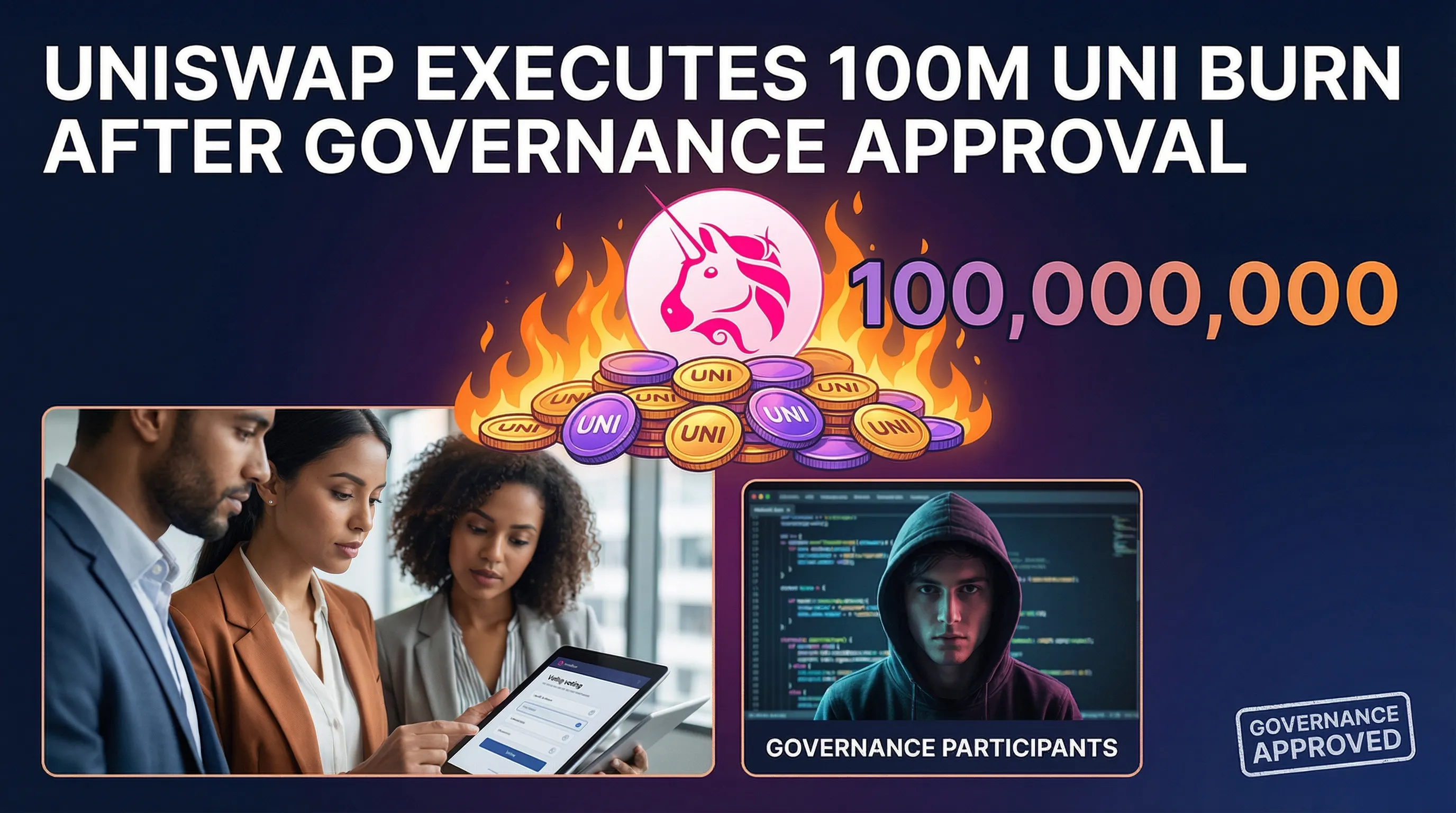
- Massive Supply Reduction: Uniswap has permanently burned 100 million UNI tokens, worth approximately $596 million, from its treasury.
- Overwhelming Governance Support: The "UNIfication" fee-switch proposal passed with near-unanimous 99.9% approval from token holders.
- Immediate Market Impact: Following the burn, the UNI token price rose over 5%, with increases in trading volume and market cap.
- New Fee Structure Activated: Protocol fees are now active on Uniswap v2 and select v3 pools, with net revenue directed toward future UNI token burns.
A Landmark Governance Decision Executed
In a landmark event for decentralized finance governance, the Uniswap protocol has successfully executed one of the largest token burns in DeFi history. Following the resounding approval of its "UNIfication" proposal, the protocol removed 100 million UNI tokens—valued at roughly $596 million—from its treasury, permanently reducing the total supply.
On-chain data confirmed the burn transaction was completed in the early hours of December 28th UTC. As noted by analyst EmberCN, this action marks the first large-scale implementation of the governance decision, showcasing the power of decentralized autonomous organization (DAO) voting mechanisms in major DeFi protocols.
"UNIfication has officially been executed onchain," confirmed Uniswap Labs in a post on X.
Overwhelming Consensus and Key Backers
The proposal achieved a staggering level of consensus, passing with 99.9% support. Over 125 million UNI tokens were cast in favor, dwarfing the mere 742 tokens voting against it. This decisive vote underscores strong alignment among the Uniswap community on the protocol's economic future.
The proposal garnered support from several influential figures in the crypto ecosystem, including:
- Jesse Waldren: Founder and managing partner of Variant, a crypto-focused venture capital firm.
- Kain Warwick: Founder of DeFi protocols Infinex and Synthetix.
- Ian Lapham: A former engineer at Uniswap Labs.
Activating the Fee Switch and Future Burns
The execution of "UNIfication" activated significant changes to the protocol's fee mechanics:
- Interface fees charged by Uniswap Labs were reduced to zero.
- Protocol fees were activated on Uniswap v2 and a selection of v3 pools on the Ethereum mainnet.
- Fees generated by Unichain are now directed toward covering Optimism and Layer-1 data costs, with any net revenue flowing into a mechanism for future UNI token burns.
Market Reaction and Updated Tokenomics
The market reacted positively to this deflationary event. According to CoinMarketCap data, the UNI token price increased by more than 5% in the 24 hours following the burn, accompanied by a rise in trading volume and market capitalization.
The token's circulating supply now stands at approximately 730 million UNI out of a total fixed supply of 1 billion. This substantial burn enhances the token's scarcity and aligns its economic model more closely with the protocol's success and fee generation.
Continued Focus on Ecosystem Growth
The Uniswap Foundation emphasized that this new fee mechanism does not come at the expense of ecosystem development. Supporting builders remains a "key priority." To fund ongoing innovation, the Foundation plans to create a Growth Budget, distributing 20 million UNI tokens to spur development and expansion across the Uniswap decentralized exchange ecosystem.
This historic move solidifies Uniswap's position at the forefront of DeFi governance and tokenomics, setting a precedent for how major protocols can implement deflationary measures and reward long-term token holders through community-driven decisions.