
Key Takeaways
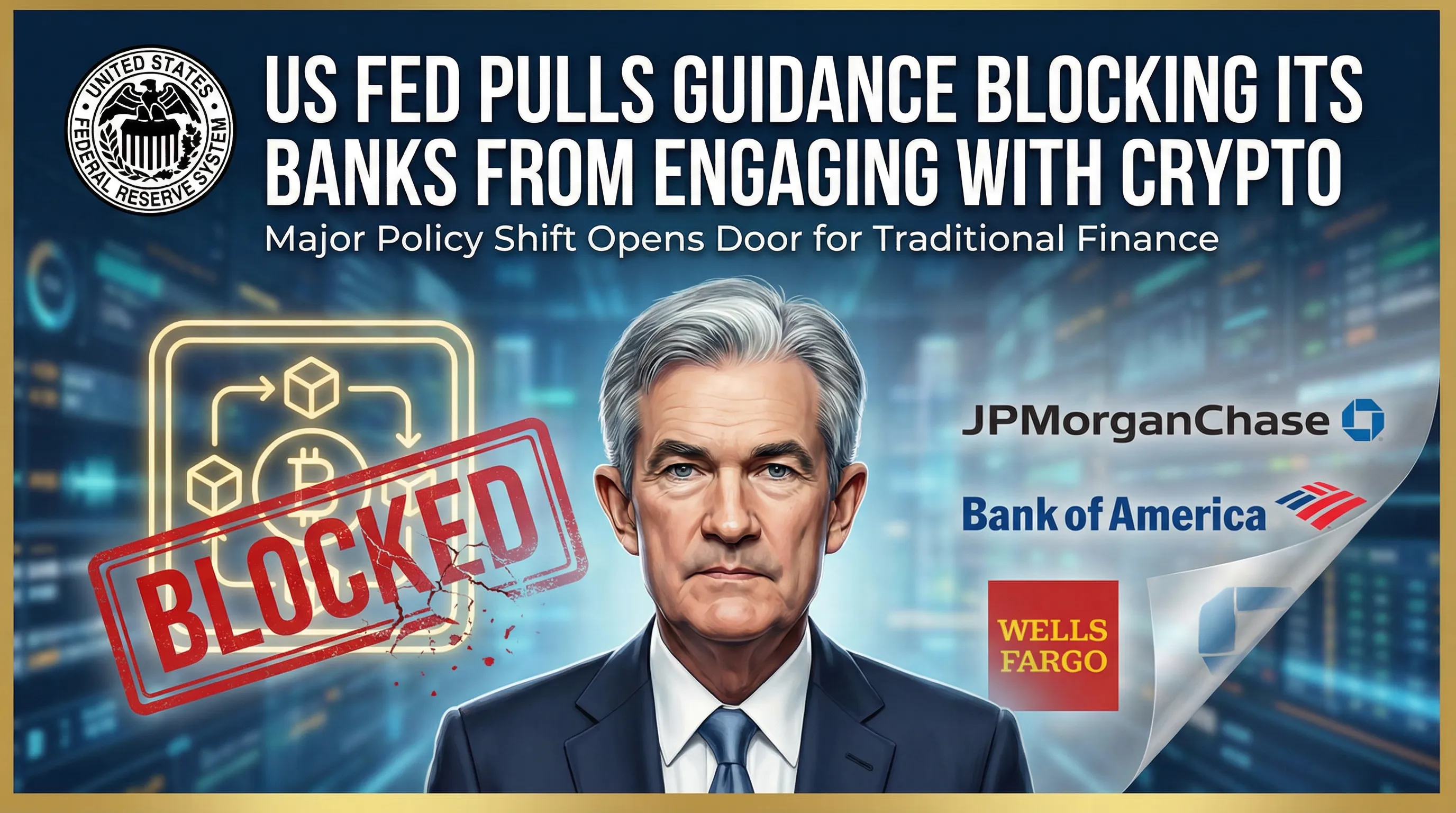
- Policy Shift: The U.S. Federal Reserve has formally withdrawn its 2023 guidance that severely limited how banks under its supervision could engage with crypto assets.
- Modernization Drive: The Fed cited an evolved understanding of innovative financial products and an outdated policy as key reasons for the change.
- New Pathway: Concurrently, the Fed issued new guidance creating a formal process for both insured and uninsured state member banks to pursue crypto-related "innovative activities" under specific risk management rules.
- Industry Reaction: The move was praised by crypto industry leaders who had been previously hindered by the old rules, though it faced internal dissent from one governor concerned about regulatory arbitrage.
A Watershed Moment for Banks and Digital Assets
In a significant pivot, the U.S. Federal Reserve has rescinded its restrictive 2023 guidance that blocked Federal Reserve-supervised banks from engaging with cryptocurrencies. This move signals a notable evolution in the regulatory approach to digital assets within the traditional banking sector.
Why the Old Rules Were Scrapped
The withdrawn guidance, based on a principle of applying identical regulation to similar activities regardless of a bank's insured status, effectively prevented uninsured institutions from offering crypto services. The Fed stated this policy was no longer suitable. "The financial system and the Board’s understanding of innovative products and services have evolved," the central bank noted, declaring the 2023 statement "outdated."
Caitlin Long, CEO of Custodia Bank, celebrated the decision. Her institution's application for a critical Federal Reserve master account was previously denied citing this guidance. “The Fed broke the law by citing this very guidance in the Custodia denial," Long stated on social media, adding, "But most of that team is now gone or out of power at the Fed. Nature is healing."
Charting a New, Regulated Course for Innovation
Alongside withdrawing the old policy, the Fed established a new framework. It provides a formal pathway for banks to pursue "innovative activities" like cryptocurrency services, provided they meet stringent risk-management expectations. This applies to both insured and uninsured state member banks under the Fed's supervision.
Fed Vice Chair for Supervision Michelle Bowman framed the change as essential for a modern financial system: “By creating a pathway for responsible, innovative products and services, the Board is helping ensure that the banking sector remains safe and sound while also modern, efficient, and effective.”
Internal Dissent and the Road Ahead
Not all regulators agreed with the shift. Fed Governor Michael Barr dissented, arguing that equal treatment among banks maintains a level playing field and prevents regulatory arbitrage—where institutions seek the most lenient regulator. “I cannot agree to rescind the current policy statement... that would, in effect, encourage regulatory arbitrage, undermine a level playing field," Barr stated.
This development marks a clear step by a major U.S. banking regulator toward integrating digital assets into the formal financial architecture, balancing innovation with controlled risk management. It reflects the ongoing maturation of regulatory thinking around blockchain technology and crypto services.