
Key Takeaways
- Post-Settlement Lapses: Binance allegedly allowed high-risk accounts to move billions in crypto even after its 2023 $4.3B US plea deal, which mandated stricter controls.
- Red Flags Ignored: Internal data reportedly shows accounts with impossible login patterns and frequent bank detail changes, classic markers of suspicious activity often linked to unlicensed money transmission.
- Governance Questions: The findings raise serious concerns about the effectiveness of Binance's promised compliance and surveillance upgrades.
- Broader Implications: Experts stress that such cases highlight the critical need for adaptive governance, real-time monitoring, and robust sanctions screening in the digital asset ecosystem.
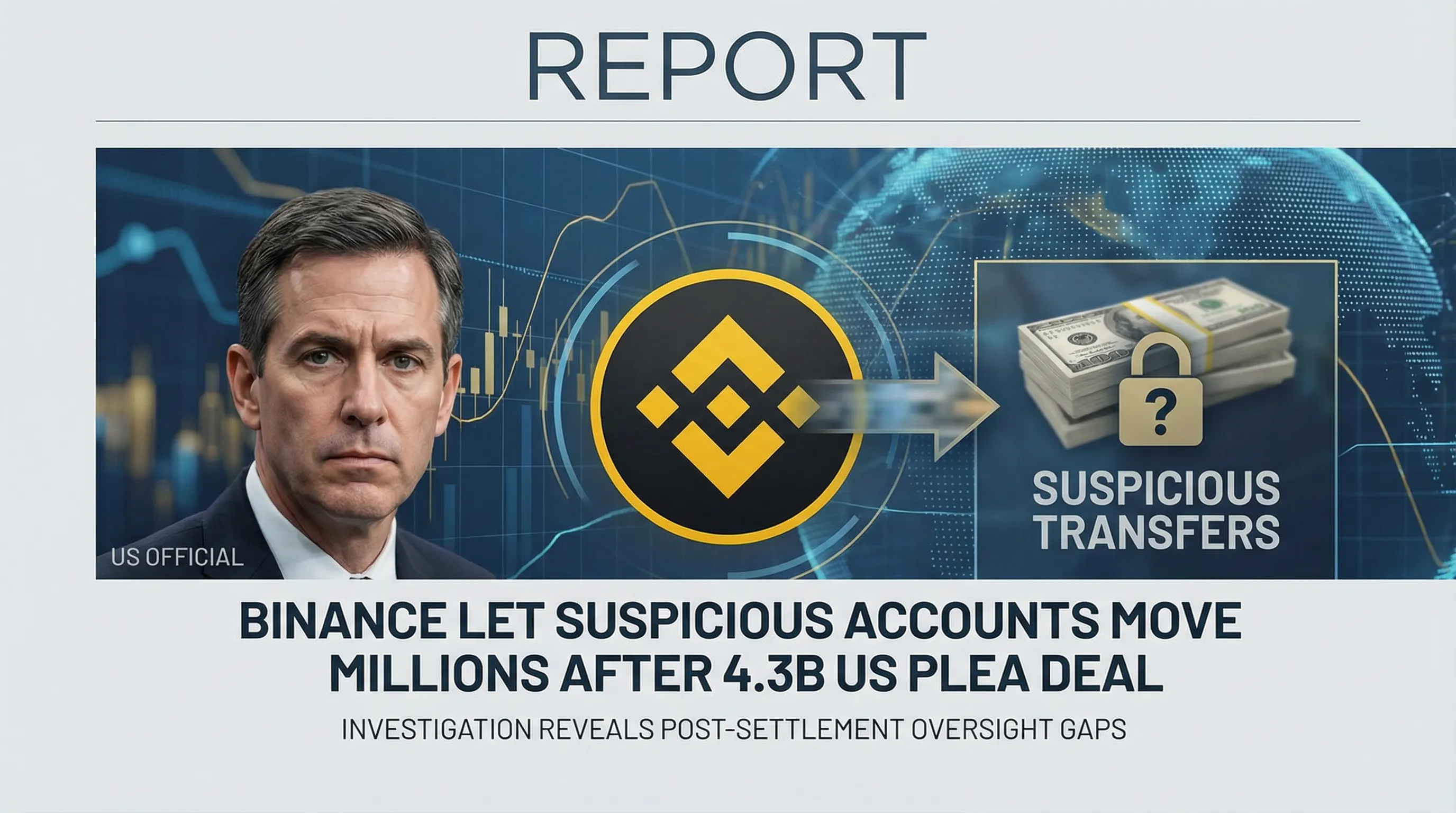
A new report from the Financial Times alleges that cryptocurrency exchange Binance allowed a network of suspicious accounts to move billions of dollars after it pledged to overhaul its compliance systems as part of a landmark $4.3 billion settlement with U.S. authorities in 2023.
Billions in Questionable Transactions
According to internal data reviewed by the FT, a specific network of 13 user accounts processed approximately $1.7 billion in transactions from 2021 onward. Crucially, about $144 million of that total was moved after the November 2023 plea agreement. The files reportedly contain detailed user information, including KYC documents and transaction histories for individuals in countries like Venezuela, Brazil, Syria, Niger, and China.
“When accounts displaying repeated red flags remain active, that points to an escalation and oversight challenge rather than one of market structure. Robust governance, sanctions screening, and post-trade surveillance are of critical importance,” said Nick Heather, head of trading at financial services firm ONE.io.
Glaring Red Flags and Anomalies
The report details specific accounts exhibiting patterns that compliance experts would deem highly suspicious:
- One account, linked to a young Venezuelan woman, received over $177 million and changed its linked bank details 647 times in just 14 months.
- Another account, held by a junior bank employee in a poor Caracas district, saw $93 million flow through it. Internal logs showed the account was accessed from Caracas and then from Osaka, Japan, less than 10 hours later—a sequence experts called physically impossible and a major red flag.
Former prosecutors noted such activity is typically consistent with an unregistered money-transmitting business.
Broken Promises and Regulatory Scrutiny
As part of its 2023 plea deal, Binance committed to implementing real-time monitoring, enhanced due diligence, and regular customer reviews to detect illicit finance. U.S. authorities had previously accused the exchange of failing to report over 100,000 suspicious transactions linked to terrorism, ransomware, and narcotics.
Regulatory and AML specialists cited in the report state these new findings raise fresh, serious questions about how effectively Binance has implemented the governance and surveillance upgrades it promised. The report also notes that all 13 accounts in question received about $29 million in USDT from wallets later frozen by Israel under anti-terrorism laws.
Binance did not provide an immediate comment on the allegations. This report emerges in the wake of former U.S. President Donald Trump's pardon of Binance founder Changpeng "CZ" Zhao in October.