
Key Takeaways
- Billions Lost to Rug Pulls: Automated "rug pull" scams alone accounted for nearly $6 billion in global crypto losses by the end of 2025.
- Evolving Deception Tactics: Scammers now use highly technical smart contract exploits, including honeypot tokens and malicious multi-signature wallet traps.
- Fake Exchange Proliferation: Fraudulent platforms, often impersonating legitimate exchanges, are a primary vehicle for listing scam tokens.
- Vigilance is Key: Identifying red flags like unlimited approval requests and anonymous teams is crucial for protecting your digital assets.
The Rising Tide of Crypto Scams in 2025
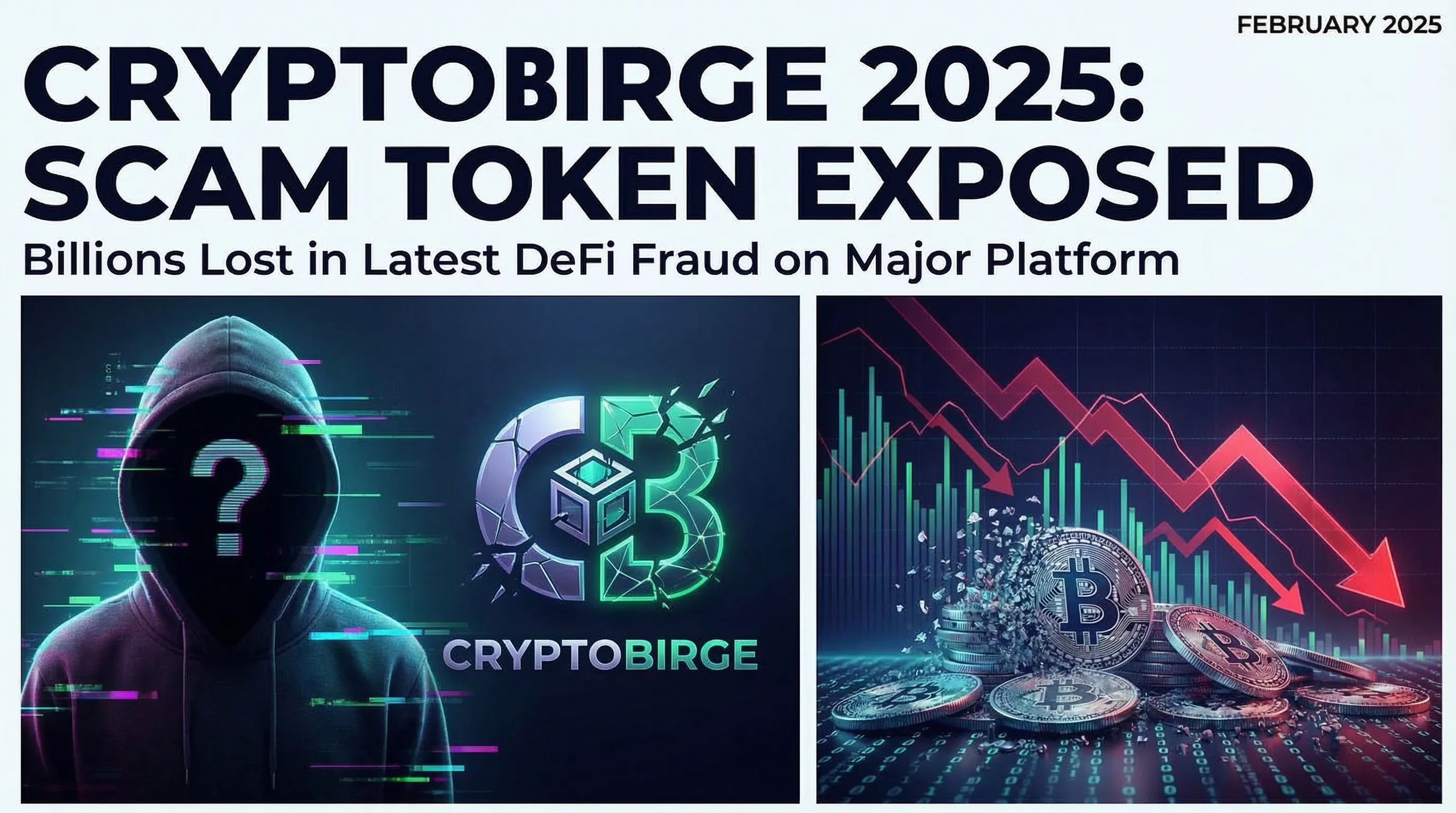
The cryptocurrency ecosystem in 2025 is a battleground of innovation and deception. While blockchain technology advances, so do the schemes of malicious actors. Scam tokens on digital asset exchanges—sometimes colloquially called "cryptobirges"—have evolved into highly sophisticated operations, primarily leveraging automated "rug pull" and "honeypot" mechanisms. The scale is staggering: by late 2025, rug pulls had directly led to nearly $6 billion in investor losses worldwide, highlighting a critical need for enhanced due diligence and security practices in decentralized finance.
Decoding the Top Scam Token Archetypes of 2025
Modern crypto scammers are software engineers of fraud, embedding specific technical exploits within token smart contracts to irreversibly trap investor funds. Understanding their methods is the first line of defense.
1. The Inescapable Honeypot Token
These tokens are designed as one-way streets: you can buy, but you cannot sell. A notorious 2025 example was the Bonk Killer (BONKKILLER) token on the Solana network. It achieved a fictitious market capitalization of $328 trillion before investors discovered the selling function was permanently disabled in the contract code, locking their capital indefinitely.
2. Malicious Multi-Signature Wallet Traps
This social engineering scam often originates on platforms like YouTube. Users are lured with tutorials on how to "hack" or "steal" from a multi-signature wallet by first sending a small amount of tokens (e.g., TRX) to cover "gas fees." In reality, the wallet's smart contract is programmed to automatically redirect any incoming funds to the scammer's address, resulting in immediate loss.
3. DeFi Rug Pulls: The Liquidity Vanishing Act
Here, developers launch projects that appear completely legitimate—with websites, roadmaps, and community engagement. After building sufficient hype and liquidity, they execute the "pull" by upgrading the contract to a malicious version or simply withdrawing all pooled funds. The Kokomo Finance incident on the Optimism network in 2025 is a prime case, where developers absconded with over $5.5 million after a contract switch.
"The Kokomo Finance rug pull on Optimism underscores how a seemingly legitimate DeFi project can turn predatory overnight, erasing millions in liquidity."
4. Meme Coin Pump-and-Dump Schemes
Heavily promoted on launchpads like Pump.fun, these tokens are often controlled by insiders holding the vast majority of the supply. They orchestrate price pumps through social media hype before dumping their holdings on retail investors. The M3M3 token on Solana saw insiders manipulate the market to secure a $69 million profit between late 2024 and early 2025, leaving other holders with worthless assets.
Fake Cryptocurrency Exchanges to Avoid
Scammers frequently create entire fraudulent exchange websites ("cryptobirges") to lend credibility to their scam tokens. These platforms often impersonate legitimate services. High-risk or confirmed scam platforms reported in 2025 include:
- CoinWpro (a fraudulent impersonation of the real CoinW exchange)
- AstraX (hosted at eaialliance.com)
- Lexor Finance
- Zipmexpro.com (impersonating Zipmex)
- Sannlt.com and Miycoin.com
Critical Red Flags: How to Spot a Scam Token
Protecting your portfolio requires constant vigilance. Be extremely wary of any token or project that exhibits these characteristics:
- Unlimited Approval Requests: A major red flag is any decentralized application (dApp) or "drainer" token that requests unlimited spending permission for your assets. This can lead to a complete wallet drain.
- Anonymous Teams & Lack of Audits: Legitimate projects are typically transparent. Avoid projects where the team is anonymous, the roadmap is vague, or the smart contract code lacks a verifiable audit from a reputable third-party firm.
- High-Pressure Tactics: Be skeptical of limited-time "airdrops," "giveaways," or "verification" processes that require an upfront deposit. This is a classic sign of a phishing scam.
- Buy-Only Functionality: If a token's smart contract code explicitly prevents sell transactions, it is a confirmed honeypot. Always verify contract functions before investing.
Essential Verification Tools for Safe Investing
Before committing any funds, utilize these essential blockchain security tools:
- Smart Contract Scanners: Use platforms like Token Sniffer or Honeypot.is to automatically analyze a token's contract code for known vulnerabilities and malicious functions.
- Regulatory Trackers: Consult official warnings lists, such as the California Department of Financial Protection and Innovation (DFPI) Crypto Scam Tracker, which catalogs reported fraudulent platforms and schemes.
- Community Sentiment Analysis: Research the project across multiple social media channels and crypto forums. A lack of genuine discussion or an overabundance of bot-like hype can be telling signs.
