
Key Takeaways
- Legal Clarity: Ghana has formally legalized cryptocurrency trading, ending legal uncertainty for users and businesses.
- Central Bank Oversight: The Bank of Ghana (BoG) is now the primary regulator, with powers to license and supervise crypto service providers.
- Risk Management: The new framework aims to protect consumers from fraud, money laundering, and systemic financial risks.
- Growth & Inclusion: The law is designed to foster financial innovation and expand digital financial inclusion, particularly for youth and tech entrepreneurs.
- Regional Leader: This move solidifies Ghana's position as a significant player in Sub-Saharan Africa's rapidly growing crypto economy.
Ghana Establishes Regulatory Framework for Cryptocurrency
Ghana has taken a decisive step into the future of finance by passing legislation that legalizes and regulates cryptocurrency trading. The Virtual Asset Service Providers Bill, now signed into law, provides a clear legal framework for the digital asset industry, moving it from a regulatory gray area into a supervised financial activity.
Central Bank Takes the Helm
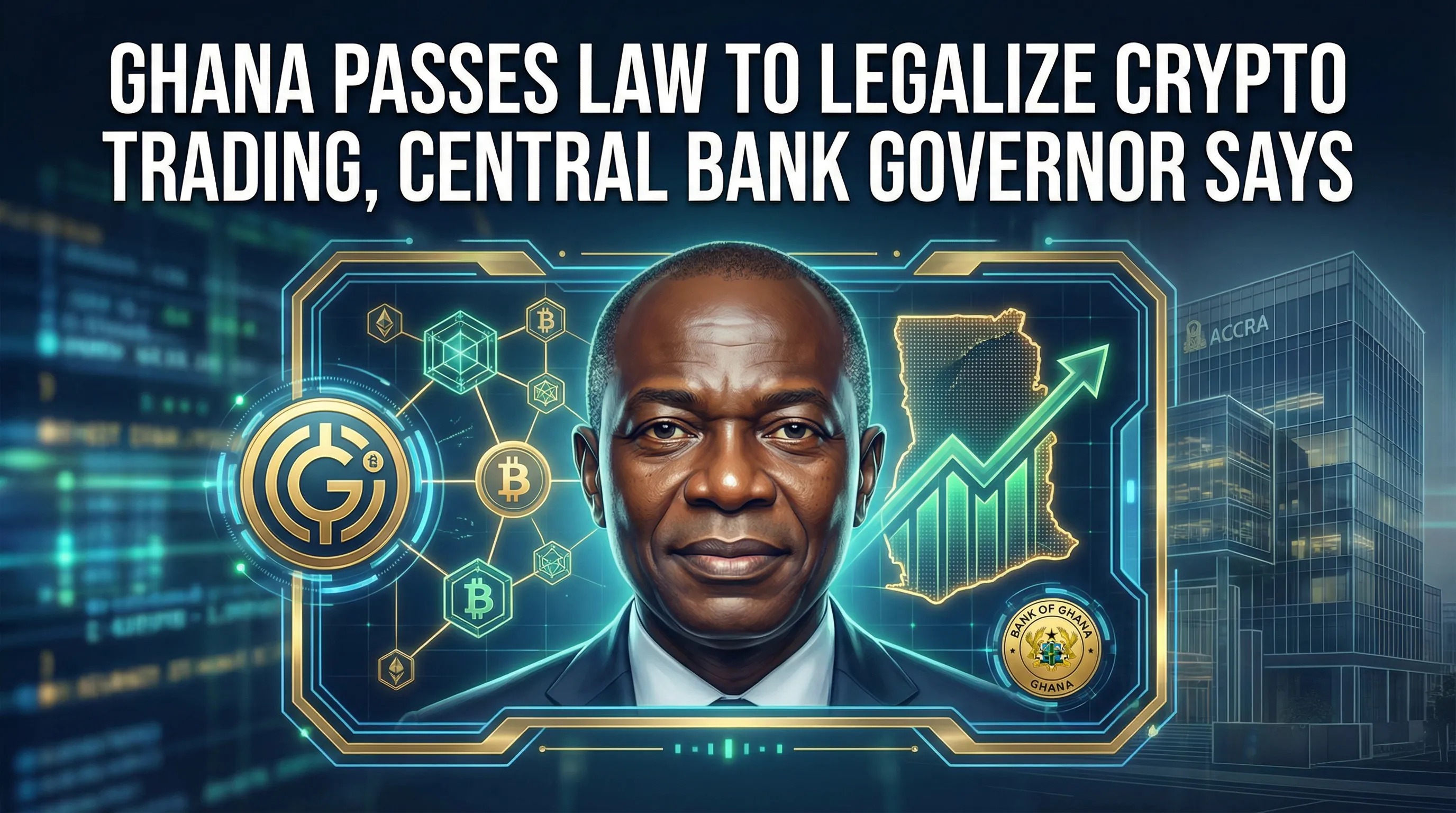
Under the new law, the Bank of Ghana (BoG) assumes the role of the primary regulatory authority for all cryptocurrency activity within the country. Governor Johnson Asiama confirmed the parliament's approval, stating the central bank now has the mandate to license and oversee crypto asset service providers (CASPs).
Asiama emphasized the shift in a public address: "Virtual asset trading is now legal, and no one will be arrested for engaging in cryptocurrency, but we now have a framework to manage the risks involved." This statement directly addresses past concerns and marks a new era of regulated digital finance in Ghana.
Drivers Behind the Regulatory Push
The legislation is driven by multiple key objectives:
- Consumer Protection: To shield users from prevalent risks like fraud and scams.
- Financial Integrity: To combat illicit activities such as money laundering and terrorist financing.
- Market Stability: To mitigate systemic risks that unregulated crypto markets can pose to the broader financial system.
- Promoting Innovation: To create a safe environment that supports blockchain innovation and attracts tech-driven investment.
- Financial Inclusion: To leverage cryptocurrency to expand access to financial services for the unbanked, especially the youth.
Ghana in the Regional Crypto Landscape
Ghana's regulatory move aligns with its rising prominence in Africa's crypto adoption. According to Chainalysis's 2025 report, Ghana ranked among the top five Sub-Saharan African countries for total crypto value received between mid-2024 and mid-2025.
The broader Sub-Saharan region witnessed over $205 billion in on-chain value, representing a growth of approximately 52% year-over-year, making it the world's third-fastest-growing crypto market. While Nigeria continues to dominate regionally, Ghana's proactive regulation positions it as a structured and attractive hub for digital asset services in West Africa.
This development represents a balanced approach, seeking to harness the economic potential of cryptocurrencies while implementing necessary safeguards, setting a potential benchmark for other nations in the region.
