
Key Takeaways: Dogecoin's Bearish Breakdown
The Dogecoin (DOGE) market structure has turned decisively bearish following a critical technical breakdown. Key developments include:
- Price Drop: DOGE fell approximately 1.8%, declining from ~$0.1341 to ~$0.1323.
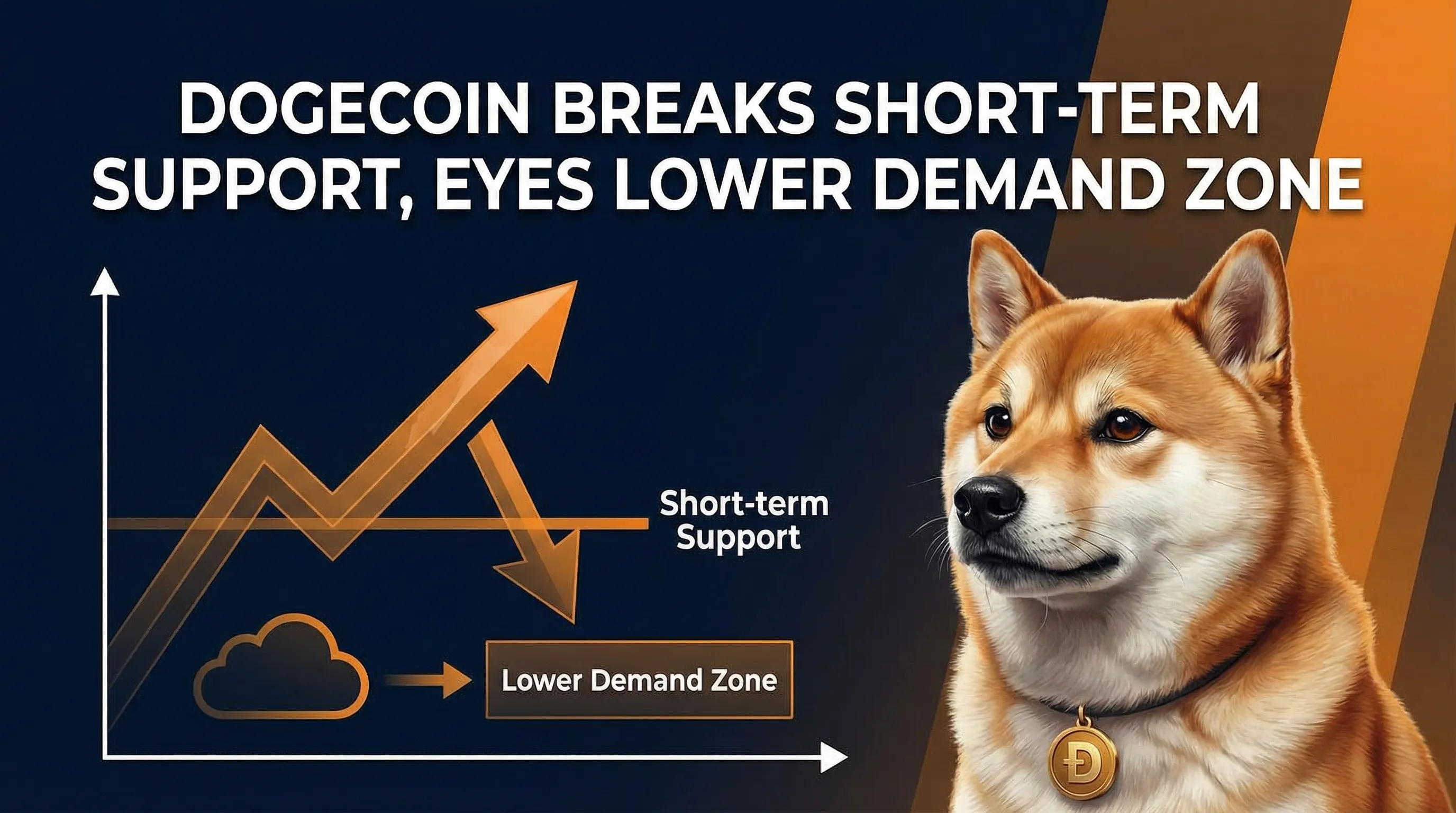
- Support Breach: The crucial short-term support level at $0.1320 was decisively broken.
- High Volume Sell-off: Trading volume spiked to ~721 million DOGE, roughly 150% above the 24-hour average, signaling active selling rather than a low-liquidity drift.
- Failed Recovery: Attempts to reclaim the $0.1350 level failed, forming a lower high and confirming seller dominance.
- Channel Break: The price fell below a short-term ascending trend channel, confirming weakening bullish momentum.
Technical Analysis: A Shift in Market Structure
The loss of the $0.1320 level has fundamentally altered the technical landscape for DOGE. This former support has now flipped into a new zone of overhead resistance. The price action indicates a market characterized by controlled selling pressure, not panic, but the momentum clearly favors the downside. As noted in the analysis, "The decline looks like controlled selling, not panic — but momentum still favors the downside." Buyer response to dips has been notably weak, suggesting a lack of strong demand at current levels.
Critical Levels for Traders to Monitor
For traders and investors, focus should now shift to the following key zones and resistance levels:
- Lower Demand Zone: The primary area to watch is the $0.1280–$0.1290 band. This region represents a prior consolidation area where dip-buyers may potentially step in to provide support.
- Resistance & Reclamation Targets: To invalidate the current bearish structure and shift sentiment, DOGE must successfully reclaim two key levels:
- $0.1320: The recently broken support, now turned resistance.
- $0.1350: A stronger resistance level that capped recent recovery attempts.
Until DOGE can sustainably break above these hurdles, any price rallies are likely to encounter significant selling pressure. The path of least resistance remains downward toward the tested demand zone.